 4.9 Stars | Google

Apr
Children's Eye Care
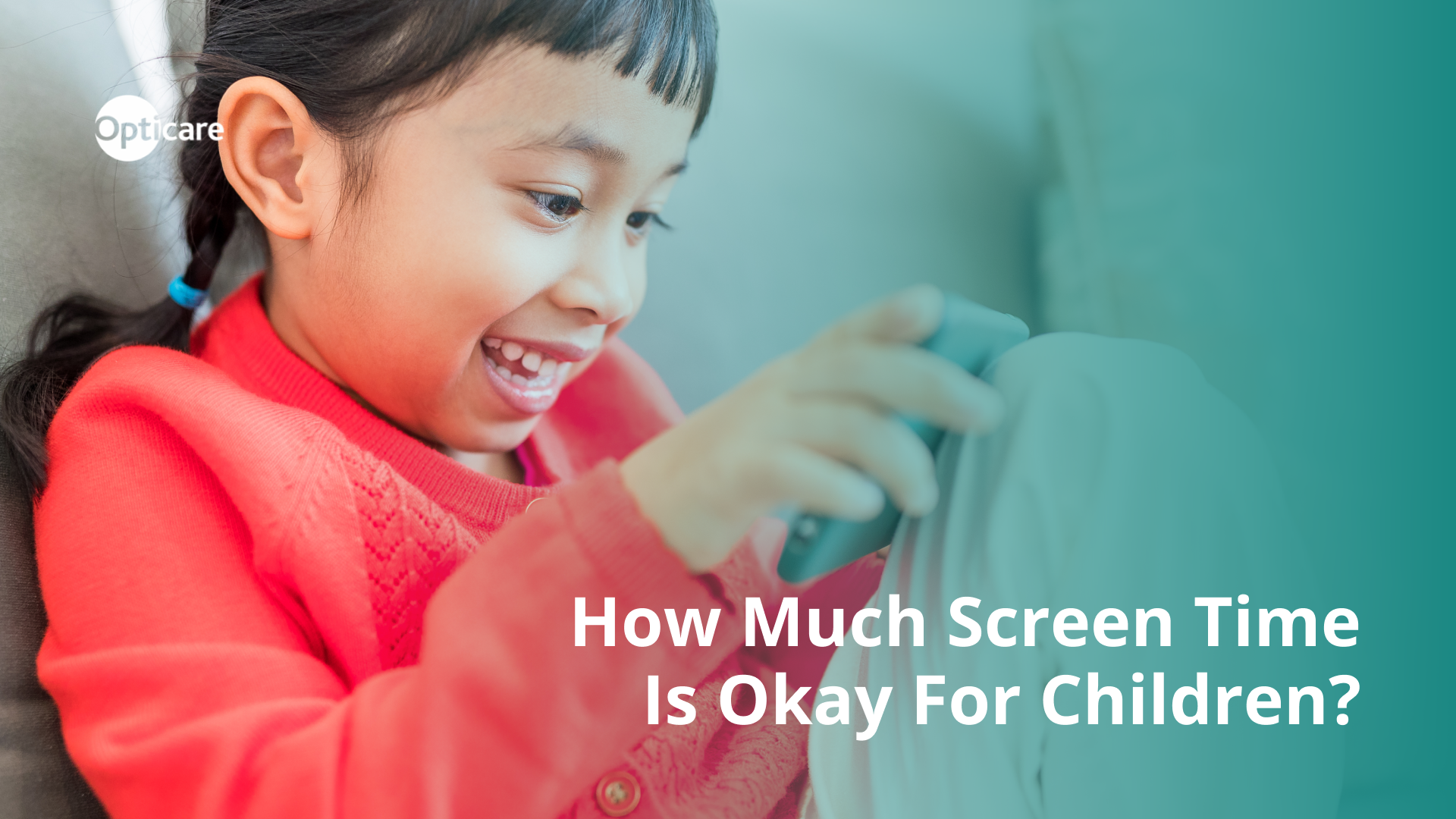
How Much Screen Time Is Okay for Children?
Last month, the Government released new guidance on screen time for young children, specifically children under 5 years old. The current generation of parents will certainly remember being told not to sit too close to the TV for fear of their “eyes going square”, but despite this old wives’ tale, the caution of screen time was well-founded.
Now it feels like almost everything has a screen on it – phones, tablets, TVs, computers, games consoles – the list goes on. At Opticare, we want to ensure your child’s eyes receive the best possible treatment. We’ve summed up the new Government screen time guidance for you below.
How Much Screen Time Should My Child Have?
You should limit young children’s total screen time wherever possible.
• Under 2 Years Old: Avoid screen time except for shared family activities that encourage bonding, interaction, and conversation.
• 2-5 Years Old: Try to keep it to 1 hour a day, less if possible.
Shared activities could include video calls with friends and family or browsing digital photo albums together.
What Content Is Better for My Child?
Young children’s brains are stimulated much more easily than adults’, so they need content specifically made for them.
• Slow-Paced Content: Slow-paced, predictable content is better for young brains. Fast-paced, over-stimulating social media-style videos may affect how young children learn how to concentrate, so it’s best to avoid them.
• Choose Safe Content: Make use of parental controls to block inappropriate, harmful content.
• Avoid Social Media: Social media isn’t made for young brains, so it should be avoided.
• Avoid AI: Don’t let young children use AI toys, tools, or chatbots until there’s more evidence on how they affect your child. This includes devices or apps such as interactive robots, smart speakers, or AI chat apps.
Additional Content Guidance:
Young children need time to process information, so choose content that is slower paced than the equivalent for older viewers. Content should focus on faces, have limited movement, simple backgrounds, and use repetition.
Parents should try to avoid children spending long periods of time simply watching or scrolling through content by themselves. This is unlikely to benefit young children and is likely to harm their development by displacing play, parent-child interaction, sleep, and physical activity.
Parents should avoid fast-paced screen content, rapid speech, or multiple characters speaking at once, such as short videos with constantly changing sounds and images. This type of content can adversely affect children’s social and emotional development and self-regulation.
Avoid having the TV on in the background as it can distract young children’s attention from playful, fun, and learning activities.
My Screen Time & My Child
• Lead By Example: Children’s brains are like sponges; they’ll copy your screen use habits. Be mindful of how often you use your phone around your child.
• Being Present: Spending long periods on your phone can make it harder to notice what your child is doing or feeling. Young children need attention, interaction, and shared moments with their parents and carers to feel secure and supported.
Setting Boundaries
Set clear boundaries for when and where young brains use screens to ensure time for other activities that support their development.
• Avoid Young Children Using Screens Alone: It reduces opportunities for social time and active play. Try watching and discussing content together with your child as it supports their development and helps you protect them from harmful content.
• Screen-Free Zones: Keep bedrooms and mealtimes screen-free. This can protect valuable family time and interaction.
• Background Watching: Try not to have screens on in the background, particularly during family time, meals, or playtime. Screens can distract from beneficial activities for your child, such as social interaction and active play.
• Mealtimes: Swap screens for background music, simple conversation, table games, or colouring.
• Bedtimes: Swap screens for reading bedtime stories together. Try to avoid screens for an hour before bed, as this could affect sleep.
How Does Screen Time Affect My Child’s Development
90% of brain growth happens before the age of 5. Young children learn best through warm, responsive interactions with parents and carers.
A large amount of screen time is linked with negative effects on children’s health and development. It can affect social, emotional, language and brain development, sleep, eyesight, and healthy weight.
Reading together, playing simple games, and engaging in back-and-forth conversations all help them develop language, problem-solving skills, self-control, and social understanding. These early interactions, even before a child can talk, create the foundations for every area of their lives.
Ensure screen time of any kind doesn’t replace sleep, physical activity, active play, or direct parent-child interaction.
• Children aged one to two years old need at least 11-14 hours of sleep, and children aged three to four years old need 10-13 hours.
• Children under 5 years old need 3 hours of physical activity and play each day.
High Levels of Screen Time in Under Fives Has Been Associated With:
• Poorer socio-emotional outcomes, meaning a reduction in children’s ability to understand, manage, and express their own emotions whilst simultaneously building positive relationships, empathising, and interacting effectively with others.
• Poorer language development, meaning children start to speak later or have a smaller vocabulary.
• Negative impacts upon other elements of cognitive development, such as attention or executive function.
• Myopia (short-sightedness), an increased risk of myopia was reported with higher screen use.
• Obesity.
• Sleep.
Advice for SEND Children
Some children with special educational needs or disabilities (SEND) may need a more tailored approach to screens. Screen-based assistive technology can be an important tool for some children and families in communicating and participating in everyday activities.
Like all young children, children with SEND need plenty of time for play, sleep, and interacting with their parents and carers. Protect screen-free time for those important activities where possible.
The Impact of Digital Screens on Children’s Eyes
Extended use of digital screens, without taking consistent breaks or making the correct adjustments, could impact your child’s eyes, causing eye strain and soreness and may contribute to the development or progression of myopia (short-sightedness).
• Digital Eye Strain: A very common condition that occurs from prolonged screen time. Spending too much time focusing on digital devices means your child’s eyes may become fatigued, and sitting too close to the screen can also strain their eye muscles. Light glare reflected on digital screens can also make this worse, causing children to strain their eyes even more.
• Myopia: The NHS says that, whilst it can often run in the family, short-sightedness may be linked to focusing on nearby objects such as books and computers for long periods during childhood. Research has found that children are twice as likely to experience myopia now as they were 50 years ago, which could also be linked to the increase in digital screen use during childhood, alongside an overall decrease in outdoor time.
Why Nurturing Healthy Minds & Bodies Matters
During the first five years, child depend on their caregivers and are highly sensitive to their surroundings. In this short period, they learn how to move, communicate, think, and relate to others. Good development in the early years, across language, communication, cognition/thinking, and physical and social-emotional development, lays the foundations for achievement and well-being in later childhood, adolescence, and beyond.
For more information on health advice and guidance for parents, visit the NHS’s Best Start in Life website.
You Might Find Useful:
• Our Guide To Your Child’s Vision
• Our guide on Myopia and Preventative Treatment
• Our Complete Guide to Blue Light