 4.9 Stars | Google

Jul
Eyewear and Technology
The Future of Smart Eyewear
What was once a simple tool for vision correction is now evolving into a sophisticated wearable technology platform.
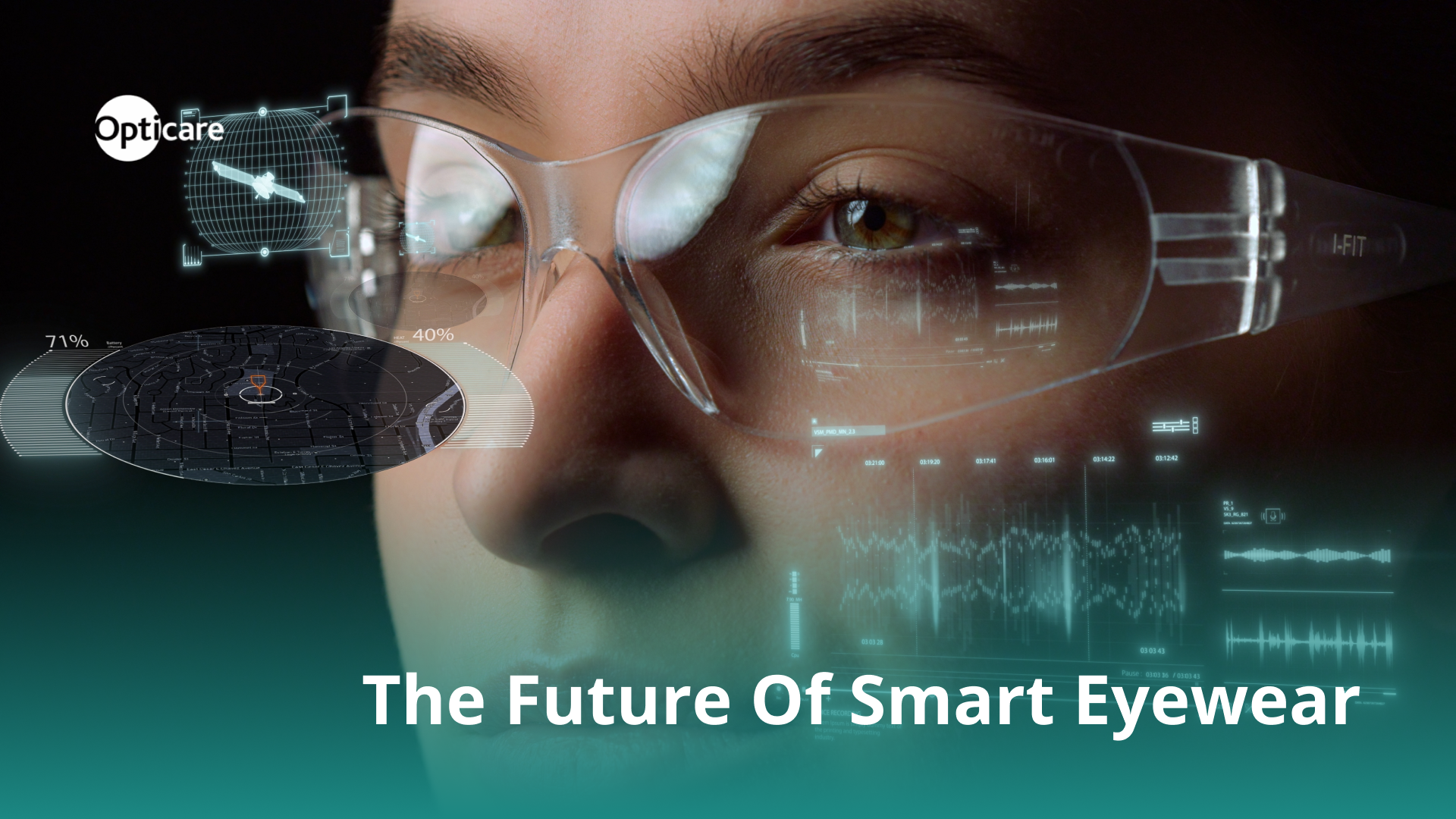
From AI-powered assistants and real-time translation to adaptive lenses and augmented reality displays, smart eyewear technology is rapidly moving from science fiction into everyday life.
At Opticare, we’ve previously looked at how artificial intelligence is transforming eyewear and examined the growing popularity of Ray-Ban Meta smart glasses. Now, we’re looking further ahead at what the future of glasses technology could mean for wearers.
What Is Smart Eyewear?
Smart eyewear combines traditional frames and lenses with integrated digital technology. Unlike conventional glasses, smart glasses can include cameras, microphones, speakers, artificial intelligence (AI), motion sensors, augmented reality displays, and connectivity with smartphones and cloud services.
The goal is to make accessing information more seamless and hands-free. Rather than constantly checking your phone, information can be delivered directly through your glasses.
How Smart Glasses Have Evolved
The first major attempt at smart eyewear came with Google Glass in 2013. However, Google pulled the product in 2015, less than seven months after its UK release. After being trialled by a BBC technology correspondent, Google Glass’s review was, “…it has a number of really useful aspects – in particular the camera. There is, however, one huge disadvantage – it makes the users look daft…” There were also concerns surrounding its impact on privacy and potential for abuse.
Whilst innovative, early smart eyewear products mainly struggled with:
- Limited battery life
- Uncomfortable designs
- Privacy concerns
- High prices
- Lack of practical applications
Today’s smart glasses are significantly different. Products such as Ray-Ban Meta and Oakley Meta have prioritised style and wearability, helping smart eyewear feel more like traditional glasses and less like experimental technology. Modern models now offer high-quality cameras, voice assistants, audio playback, messaging capabilities, and AI integration whilst remaining visually appealing.
Artificial Intelligence Is Driving The Future Of Smart Eyewear
AI is arguably the single biggest force shaping the future of glasses technology. Rather than simply acting as connected devices, future smart glasses are expected to become intelligent assistants capable of understanding both the wearer and the environment. Current AI-powered glasses can already answer questions, send messages, take photos, identify objects, provide navigation assistance, and translate languages.
Future systems are expected to become significantly more capable. Researchers are already exploring AI smart glasses that continuously understand what the wearer sees and provide contextual assistance throughout the day. These systems could help organise tasks, recognise objects, summarise information, and automate everyday activities.
The Rise Of Augmented Reality Glasses (AR)
One of the most exciting developments in smart eyewear technology is augmented reality (AR). Unlike virtual reality (VR), which replaces your surroundings, AR overlays digital information onto the real world. Future AR glasses could provide:
- Navigation directions directly in your field of view
- Live translations of signs and conversations
- Calendar reminders
- Real-time notifications
- Shopping information
- Interactive work instructions
Several major technology companies are currently investing heavily in AR eyewear, believing it could eventually become the next major computing platform after smartphones. Google’s latest Intelligent Eyewear initiative and Meta’s ongoing smart glasses development demonstrate how competitive this sector has become.
Could Smart Glasses Replace Smartphones?
One of the biggest questions UK consumers have about smart glasses is whether they will eventually replace smartphones. The answer is complicated.
Many industry experts believe smart glasses will initially complement smartphones rather than replace them entirely. However, the direction of travel is clear. Features already include hands-free calling, messaging, voice-controlled searches, photo capture, and audio streaming. Will users of Apple Pay soon be staring down card readers in these new specs?
As displays improve and AI becomes more sophisticated, many smartphone functions could gradually move into wearable devices. The BBC have highlighted growing industry belief that smart glasses could represent the next evolution of personal computing.
That said, limitations remain around battery life, connectivity, comfort, and social acceptance. Some technology observers and consumers remain sceptical that glasses will ever completely replace phones.
Innovative Glasses Lenses Are Evolving Too
The future of eyewear is not just about electronics. Some of the most important developments are occurring within the lenses themselves. Advanced optical lenses are becoming increasingly personalised through AI-assisted design and manufacturing.
Future innovations may include:
- Adaptive Tint Technology: Lenses that automatically respond to changing environments more intelligently than today’s photochromic lenses
- Dynamic Blue Light Management: Lenses capable of adjusting blue light filtering based on screen use and environmental conditions.
- Precision Customisation: Lens manufacturers are increasingly leveraging data and AI to deliver more personalised prescriptions and enhance optical performance.
For many wearers, these improvements in advanced optical lenses may prove even more impactful than smart glasses themselves.
Health Monitoring Through Smart Eyewear
One of the most promising future applications involves health monitoring. Because glasses sit so close to the eyes, they are uniquely positioned to collect valuable information. Potential future capabilities include eye movement tracking, blink analysis, fatigue detection, early disease monitoring, and neurological health insights.
AI-assisted diagnostic imaging is already helping opticians detect conditions earlier through retinal scanning and OCT imaging. Future eyewear may become an extension of this preventative healthcare approach. This could transform glasses from vision-correction devices into proactive health tools.
Accessibility Could Benefit Millions
Smart eyewear has enormous potential to improve accessibility. Existing products already offer features that can assist people with visual, hearing or mobility challenges. Future developments may include real-time subtitles, live audio descriptions, object recognition, enhanced navigation assistance and visual guidance, and AI-powered support systems.
Currently, Ray-Ban Meta and Oakley Meta already supports accessibility initiatives such as Be My Eyes, helping users to receive assistance through connected services.
Privacy Challenges & Ethical Concerns
The future of smart eyewear is not without challenges. One of the biggest concerns is privacy. As cameras and AI become more integrated into everyday eyewear, questions arise about consent, data collection, facial recognition, public recording, and information security.
A recent BBC article highlighted concerns surrounding covert filming using smart glasses, reigniting discussions about regulation and the responsible use of wearable technology. Manufacturers and policymakers will need to address these issues carefully if smart eyewear is to achieve widespread adoption.
Which Are The Best Smart Glasses Available Today?
Whilst fully immersive AR glasses remain in development, today’s leading smart eyewear options include:
Ray-Ban Meta/Oakley Meta Smart Glasses
The most mainstream smart glasses currently available, combining cameras, AI assistance, audio, and prescription lens capability.
Xreal Glasses
Popular among users seeking AR-style displays for gaming, entertainment, and productivity. Recent models are becoming lighter, more affordable, and increasingly consumer-friendly.
Emerging Google And Samsung Smart Glasses
Expected to integrate advanced AI systems and deeper connections with navigation, communication, and productivity tools.
PC Mag recently created a Best Smart Glasses for 2026, showcasing the following smart glasses:
- Best Overall: Viture Beast
- Best Affordable AR Glasses: RayNeo Air 4 Pro
- Best Social Media Glasses for Music Lovers: Oakley Meta HSTN (£479)
- Most Stylish Camera Glasses: Ray-Ban Meta Gen 2 (£458.50)
- Best AR Glasses for Nearsighted Users: Viture Luma (£369)
- Best Dimmable Smart Sunglasses: Chamelo Music Shield (£242.49)
- Best Smart Glasses for Sports: Oakley Meta Vanguard (£499)
- Best for Early Adopters: Meta Ray-Ban Display (£379)
Prices correct as of June 2026.
Ray-Ban Meta and Oakley Meta: Now Available at Opticare
At Opticare, we now stock both Ray-Ban Meta and Oakley Meta smart glasses in branch, giving customers the chance to try this technology for themselves rather than just reading about it. Both ranges are available with prescription lenses as well as non-prescription options, so wearers who need vision correction don’t have to choose between their glasses and the latest smart eyewear features.
Our team can talk you through the frame styles, lens options, and which model suits your lifestyle, whether that’s the camera and AI features of Ray-Ban Meta or the sports-focused design of Oakley Meta.
The future of glasses technology is no longer a distant concept. Smart eyewear technology is already reshaping how we interact with information, communicate with others and manage everyday tasks.
While challenges around privacy, regulation and adoption remain, the direction is clear: eyewear is evolving from a simple vision-correction device into one of the most exciting categories in wearable technology.
For UK consumers, the future of smart glasses may arrive sooner than many expect.