 4.9 Stars | Google


May
Children's Eye Care
Myopia in Children: A Guide
Myopia, often called shortsightedness, is one of the most common eye conditions affect children today. It typically begins in early childhood and, if left unmanaged, can worsen as children grow. In this guide, we explore what causes childhood myopia, how to recognise it, and crucially, how it can be managed or slowed down. For a broader look at myopia across all ages, see our full guide to myopia and preventative treatment.
Understanding Myopia in Children
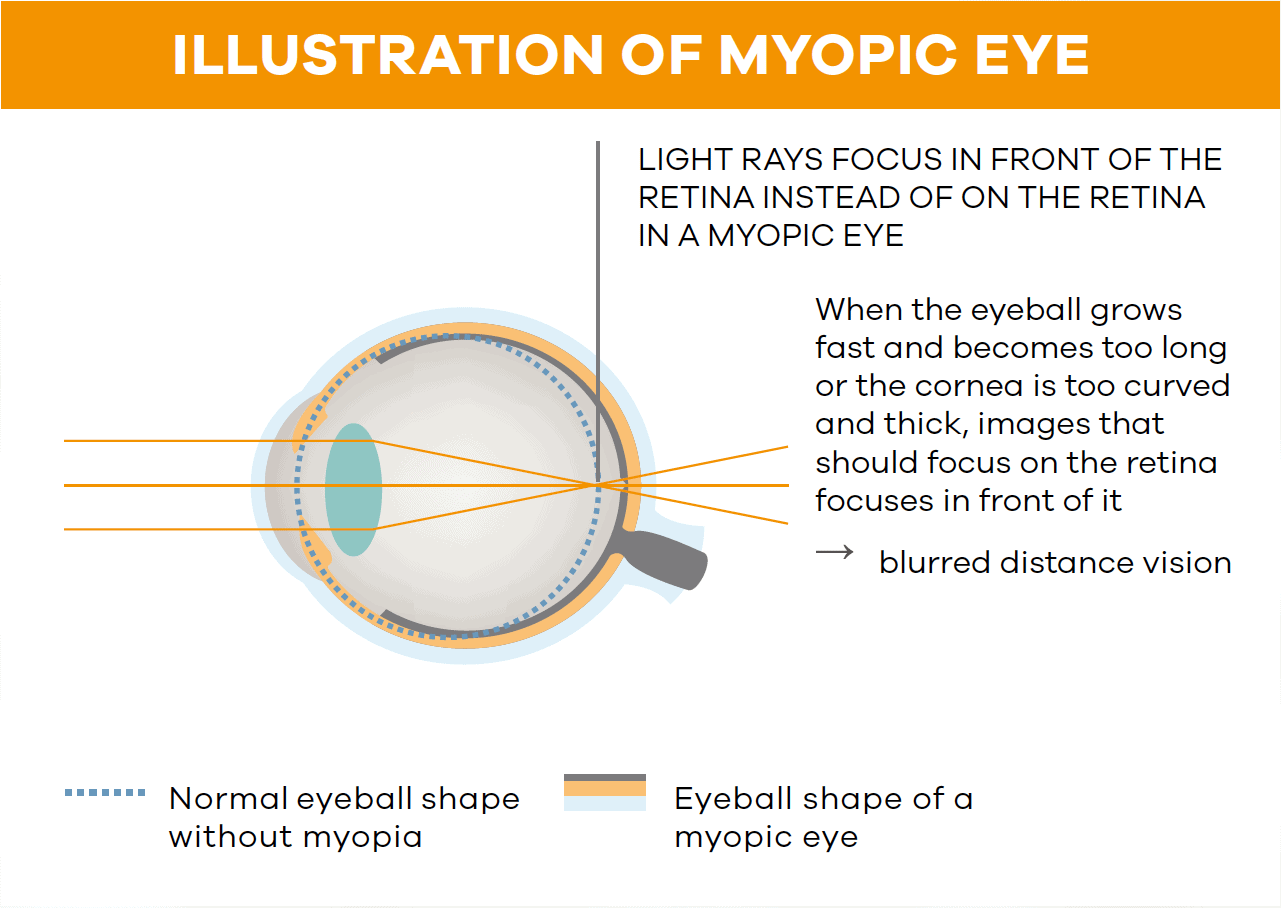
Myopia occurs when the eye grows too long from front to back, or the cornea is too curved. This causes light to focus in front of the retina, the light-sensitive lining of the eye, instead of directly on it. The result of this is that distant objects appear blurry whilst close objects remain clear.
Childhood myopia typically develops between the ages of 6 and 14 and tends to progress more rapidly in younger children. Early detection is key to managing its progression effectively. Regular eye exams help spot changes in vision quickly.
Research has now shown that about 40% of children and adolescents worldwide could be shortsighted by 2050.
Signs of Myopia in Children
Children might not always say they have trouble seeing, so look out for signs such as:
- Sitting close to the TV or leaning into books
- Frequent squinting or rubbing their eyes
- Complaints of headaches or eye strain
- Poor concentration during schoolwork
- Struggling to see distant objects clearly.
If you notice any of these signs, a comprehensive eye test at Opticare Opticians can help determine if myopia is the cause. For a broader look at your child’s visual development and the key milestones to watch for at each age, see our complete guide to your child’s vision.
What Causes Myopia in Children?
Understanding the causes of myopia helps parents be proactive about their child’s visual health. Most myopia cases arise from a mix of genetic and environmental factors.
Genetics
If one or both parents are short-sighted, there’s a higher chance your child may develop myopia too. Genetics influence how the eye develops and can predispose children to faster progression.
Visual Lifestyle
Modern lifestyles play a significant role in the rising rates of childhood myopia:
- Excessive near work (like screen time or reading at very close distances) has been linked to increased myopia risk
- Limited time outdoors also contributes. Natural light and focusing on distant objects are believed to help healthy eye growth
- Poor lighting and prolonged close-up tasks may strain a child’s developing eyes.
Experts recommend balanced visual habits, frequent breaks during close work and plenty of outdoor play to support eye health and potentially slow myopia progression.
Slowing Down Myopia Progression in Children
Whilst traditional glasses and contact lenses correct blurry vision, they don’t stop myopia from worsening. Recent advances in myopia management provide evidence-based ways to slow progression.
At Opticare Opticians, we offer specialised myopia control options including MiYOSMART glasses and MyDay MiSight contact lenses.
What is MiYOSMART?
MiYOSMART is a myopia management lens produced by HOYA, a leading optical and healthcare company.
MiYOSMART lenses use a special technology to slow the progression of myopia. The lens corrects vision and simultaneously provides a treatment zone. The treatment zone includes many ‘lenslets’ that create an effect called myopic defocus. This means that some light is focused in front of the light-sensitive layer at the back of the eye. This reduces the trigger for eye growth, in effect applying the brake to eye growth. Clinical studies show average reductions of around 60% over two years. Read our dedicated guide to MiYOSMART for more detail on how the lenses work.
MyDay MiSight
For children who prefer freedom from glasses, MiSight 1-day contact lenses offer a daily disposable option that helps slow myopia progression whilst providing clear vision.
Clinical results show that the majority of children find these lenses comfortable, easy to handle, and a welcome alternative to glasses.
Other evidence-based approaches, such as specialised overnight lenses (ortho-k) and low-dose atropine eye drops, have also shown effectiveness in slowing myopia in certain cases. Discussing these options with your optometrist can help identify the best pathway for your child.
For more information about our Myopia Control Options, click here.
Why Getting Regular Eye Exams Matters
Early and regular eye examinations are vital. Children’s eyes develop rapidly and changes in vision can occur subtly over months. Visiting a professional optician, particularly one experienced in paediatric eye care like Opticare Opticians, ensures:
- Accurate diagnosis of visual problems
- Personalised myopia management plans
- Access to the latest evidence-based treatments
- Ongoing monitoring of eye growth and prescription changes.
Opticare Opticians’ experienced team offers personalised care and advanced testing to catch early signs and intervene when it matters most.
Supporting Your Child’s Eye Health at Home
You can also encourage healthy eye habits at home:
- Encourage More Time Outdoors: Natural daylight and distance viewing can help eye development.
- Limit Screen Time: Regular breaks help reduce sustained near-focusing.
- Follow the 20/20/20 Rule: Every 20 minutes of near work, look at something 20ft away for 20 seconds.
- Provide Balanced Visual Tasks: Mix reading, play, and outdoor activities throughout the day.
Myopia in children is common, but it’s not something you simply have to accept. With early detection, lifestyle awareness, and modern myopia management solutions, you can support your child’s visual development and help slow down the progression of short-sightedness.
At Opticare Opticians, comprehensive eye care and tailored myopia control programmes are designed to keep your child seeing clearly today and safeguarding their eye health for tomorrow.
Want to take the next step? Book a myopia consultation today and get personalised advice from experienced optometrists.